

Guitar effects
KSh 74,999.00
You’re now subscribed to price tracking for this product. We’ll notify you if the price drops.
Guitar effects
are electronic or digital devices that alter the sound of an electric guitar. They are used to shape the tone, add textures, and create unique sonic landscapes. Guitar effects are essential tools for guitarists across various genres, helping them achieve their desired sound and express their musical ideas.

Here’s a breakdown of common types of guitar effects:
By Function:
- Distortion/Overdrive/Fuzz: These effects alter the guitar signal by clipping it, creating a range of sounds from a warm, crunchy overdrive to a thick, distorted tone or a vintage, buzzy fuzz. They add sustain, harmonics, and aggression to the sound and are fundamental in rock, blues, and metal.
- Dynamics (Compression/Noise Gate):
- Compressors reduce the dynamic range of a signal, making loud sounds quieter and quiet sounds louder. This can even out the volume, increase sustain, and alter the attack of notes.
- Noise gates eliminate unwanted hum, hiss, and static by cutting off the signal below a certain threshold.
- Filter (Wah/EQ/Talk Box):
- Wah pedals create a vowel-like sound by sweeping a filter up and down the frequency spectrum.
- Equalizers (EQ) allow you to boost or cut specific frequency ranges, shaping the overall tone of the guitar.
- Talk boxes direct the guitar sound into the player’s mouth through a tube, allowing them to shape the sound into speech-like patterns.
- Modulation (Chorus/Flanger/Phaser/Tremolo/Vibrato): These effects create movement and texture by modulating the audio signal.
- Chorus creates a shimmering effect by doubling the signal with slight pitch and delay variations, making it sound like multiple guitars are playing.
- Flanger produces a swirling, jet-like sound by mixing the original signal with a slightly delayed and modulated copy.
- Phaser creates a sweeping, swirling effect by passing the signal through a series of filters that shift the phase of different frequencies.
- Tremolo creates a pulsating volume effect.
- Vibrato creates a pulsating pitch effect.
- Pitch and Frequency (Octave/Pitch Shifter): These effects alter the pitch of the guitar signal.
- Octave pedals add a tone one or more octaves above or below the original.
- Pitch shifters can shift the pitch by various intervals, creating harmonies or other unique sounds.
- Time-Based (Delay/Reverb/Looper): These effects manipulate the signal in the time domain.
- Delay creates echoes of the original sound.
- Reverb simulates the sound of an instrument playing in a physical space, adding ambiance and depth.
- Loopers record and playback a musical phrase, allowing for layering and soloing over a repeating part.
- Feedback/Sustain: Some specialized effects are designed to create or enhance feedback and sustain.
- Other Effects: This category includes less common but still creative effects like synthesizers, amp simulators, and more.
By Format:
- Stompboxes (Pedals): Individual effects housed in small enclosures, typically placed on the floor and controlled with footswitches. Guitarists often use multiple stompboxes chained together on a pedalboard to create complex sounds.
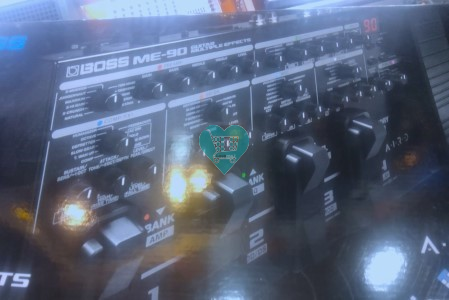
- Multi-Effects Units: These units combine multiple effects into a single device. They can range from simple units with a few basic effects to sophisticated floor processors that model amps and cabinets in addition to a wide array of effects.
- Rack-Mounted Effects: Primarily used in studio settings, these are larger units that offer extensive control and routing options.
- Software Plugins: Computer-based effects that can be used within a digital audio workstation (DAW) for recording and mixing.
Key Considerations When Choosing Guitar Effects:
- Genre and Style: Different genres often utilize specific types of effects.
- Desired Sound: What kind of sonic textures are you trying to achieve?
- Budget: Effects pedals and multi-effects units can range significantly in price.
- Complexity: Some effects are simple to use, while others offer deep control over various parameters.
- Signal Chain Order: The order in which effects are connected can significantly impact the final sound.
Guitar effects are a vast and exciting world, offering endless possibilities for sonic exploration and creativity. Experimenting with different effects and combinations is key to discovering your unique guitar sound.
Related products


Reviews
Clear filtersThere are no reviews yet.