


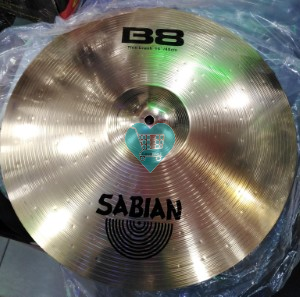


Crash Cymbal
KSh 8,299.00
You’re now subscribed to price tracking for this product. We’ll notify you if the price drops.
Crash cymbal
is a type of cymbal used in drumming to create a loud, sharp, and sudden accent sound, often referred to as a “crash.” It’s primarily used for occasional emphasis rather than for maintaining a continuous rhythm like a ride cymbal or hi-hats.
Function: They are used to mark specific moments in music, such as:
- The end of a musical phrase.
- Accenting a drum fill.
- Emphasizing a beat or transition.
- Creating dramatic effects.
Size: They typically range in diameter from 14 to 18 inches (36 to 46 cm), but sizes can go as small as 8 inches and up to 24 inches.
- Smaller crashes (14-16 inches): Generally have a higher pitch, faster decay, and are often used for quicker, brighter accents.
- Larger crashes (18-20+ inches): Tend to have a lower pitch, longer sustain, and a fuller, more powerful sound.
Thickness: The thickness of a crash cymbal also affects its sound:
- Thinner crashes: Respond quickly, have a brighter tone, and a faster decay.
- Thicker crashes: Are louder, have a longer sustain, and a more cutting sound, often preferred in louder music genres like rock and metal.
Placement: On a drum kit, a crash cymbal is typically mounted on its own stand, positioned for easy access to be struck with a drumstick. Drummers often have one or two crash cymbals, and some may have more for a wider range of sonic possibilities. Traditionally, for a right-handed drummer, the ride cymbal is on the right, and the crash is on the left, but setups can vary.
Types : There are many variations of crash cymbals, often categorized by their:
- Alloy: The mixture of metals used (e.g., B20 bronze, B8 bronze, brass) significantly impacts the sound.
- Weight: As mentioned, thickness affects weight and tonal characteristics.
- Finish: Different finishes (e.g., brilliant, traditional, dark) can influence the cymbal’s sound and appearance.
- Specific Design: Some crashes are designed for particular sounds, such as “trash crashes” with a more raw and dissonant tone.
History: While cymbals have ancient origins, the crash cymbal as it’s known today evolved with the development of the drum set in the early 20th century. Drummers in the jazz era began using thinner cymbals that could be effectively crashed with sticks, leading to the development of dedicated crash cymbals.
In summary, a crash cymbal is an essential part of a modern drum kit, providing impactful accents and dynamic punctuation to music across various genres.
Related products


Conga Drums CFC- Blue
Original price was: KSh 55,000.00.KSh 49,999.00Current price is: KSh 49,999.00.
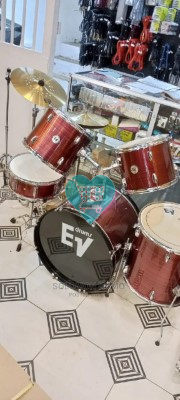
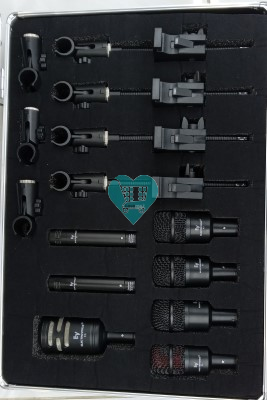

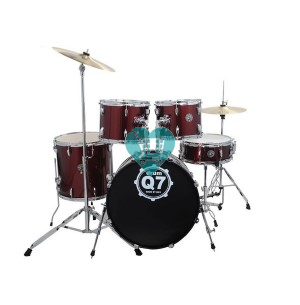
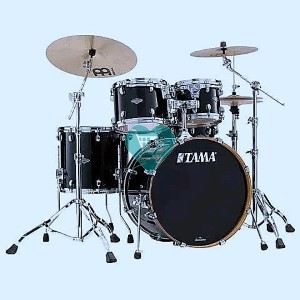

Tama Drumset 5pcs 2 Stands
Original price was: KSh 50,000.00.KSh 44,999.00Current price is: KSh 44,999.00.


Reviews
Clear filtersThere are no reviews yet.