
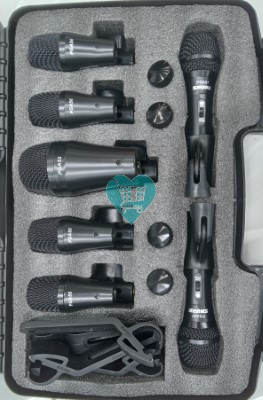

Shure Drumset Microphone
KSh 27,999.00
You’re now subscribed to price tracking for this product. We’ll notify you if the price drops.
A drumset microphone
is a microphone (or set of microphones) specifically designed or used for capturing the sound of a drum kit. Miking a drum kit effectively is crucial for both live performances and studio recordings to ensure each part of the kit is heard clearly and with the desired sonic characteristics.

There are various approaches and types of drumset microphones used for miking drums, often categorized by the part of the kit they are intended for:
Common Drumset Microphone and Techniques:
- Kick Drum:
- Dynamic Drumset Microphones: These are the most common due to their ability to handle high sound pressure levels (SPL) and capture the low-end frequencies effectively. Popular choices include the Shure Beta 52A, AKG D112, Audix D6, and Sennheiser e602-II.
- Placement: Techniques vary, including placing the mic inside the drum pointing towards the beater for attack, further back inside for more low-end, or even outside the resonant head. Sometimes, two microphones are used – one for attack and one for low-end.
- Snare Drum:
- Dynamic Microphones: Industry standards like the Shure SM57 are widely used for their ability to handle high SPL and capture the snare’s crack and body. Other options include the Audix i5 and Sennheiser e604.
- Condenser Microphones: Some engineers prefer condenser mics for snare to capture more high-frequency detail and subtlety. However, they need to handle the SPL.
- Placement: Typically placed 1-2 inches above the rim, angled towards the center of the head. Sometimes a second mic is placed underneath to capture the sound of the snares themselves.
- Toms (Rack and Floor):
- Dynamic Microphones: Similar to snare mics, rugged dynamics like the Sennheiser e604, Audix D2/D4, and Shure SM57 are common. Many drum mic kits include mics specifically shaped for easy mounting on tom rims.
- Placement: Usually positioned above the head, angled towards the center.
- Overheads (Cymbals and Overall Kit Sound):
- Condenser Microphones: Small-diaphragm or large-diaphragm condensers are typically used to capture the higher frequencies of cymbals and provide an overall stereo image of the kit. Popular choices include Neumann KM184, AKG C451, Rode NT5, and various large-diaphragm models.
- Placement: Common techniques include:
- Spaced Pair (A/B): Two mics positioned equidistant from the snare drum, often a few feet above and spread out to capture a wide stereo image.
- XY Coincident Pair: Two cardioid mics placed with their capsules close together and angled at 90 degrees to each other, providing good mono compatibility.
- ORTF: Similar to XY but with the capsules spaced slightly apart and angled at 110 degrees for a wider stereo image.
- Glyn Johns Technique: Uses four microphones – one overhead centered above the snare, one floor tom level pointing at the snare, and close mics on kick and snare.
- Recorderman/Modified Glyn Johns: Another four-mic technique with specific placement above the snare and between the kick and floor tom.
- Hi-Hat:
- Condenser Microphones: Small-diaphragm condensers are often used to capture the detailed sound of the hi-hat.
- Placement: Typically placed a few inches above the hi-hat, avoiding direct air puffs from the cymbals closing.
- Room drumset Microphones (Optional):
- Condenser or Dynamic Microphones: Used to capture the ambient sound of the room, adding depth and space to the drum mix.
- Placement: Can be placed at various distances from the kit, depending on the desired amount of room sound.
Drumset Microphone Kits:
For convenience and cost-effectiveness, many manufacturers offer drum microphone kits that include a selection of microphones tailored for different parts of the drum kit, along with clips, mounts, and a carrying case. Popular kits come from brands like Shure, Audix, Sennheiser, AKG, and PreSonus.
Key Considerations for Miking drumset Microphone:
- Drum Tuning and Condition: Well-tuned drums with good heads will always sound better when miked.
- Microphone Placement: Experimentation is key to finding the optimal sound for each drum. Small changes in position can have a significant impact.
- Phase Cancellation: When using multiple microphones, be aware of potential phase issues that can result in a thin or weak sound. Techniques like the “3:1 rule” (distance between mics should be at least three times the distance from each mic to its source) and phase reversal switches on mixers/preamps can help.
- Room Acoustics: The sound of the room will affect the overall drum sound, especially when using overhead and room microphones. Treating the room can improve the recording quality.
- Bleed: Sound from other drums and cymbals bleeding into individual microphones is often unavoidable. Careful mic placement and selection of polar patterns (e.g., cardioid for more focused pickup) can help minimize bleed.
Choosing the right drumset microphones and employing effective miking techniques are essential for capturing a powerful and well-balanced drum sound for any musical application.
Related products


Omax Audio Mixer PMX1608DU 16 Channel Yellow Powered
Original price was: KSh 37,499.00.KSh 30,999.00Current price is: KSh 30,999.00.


Reviews
Clear filtersThere are no reviews yet.